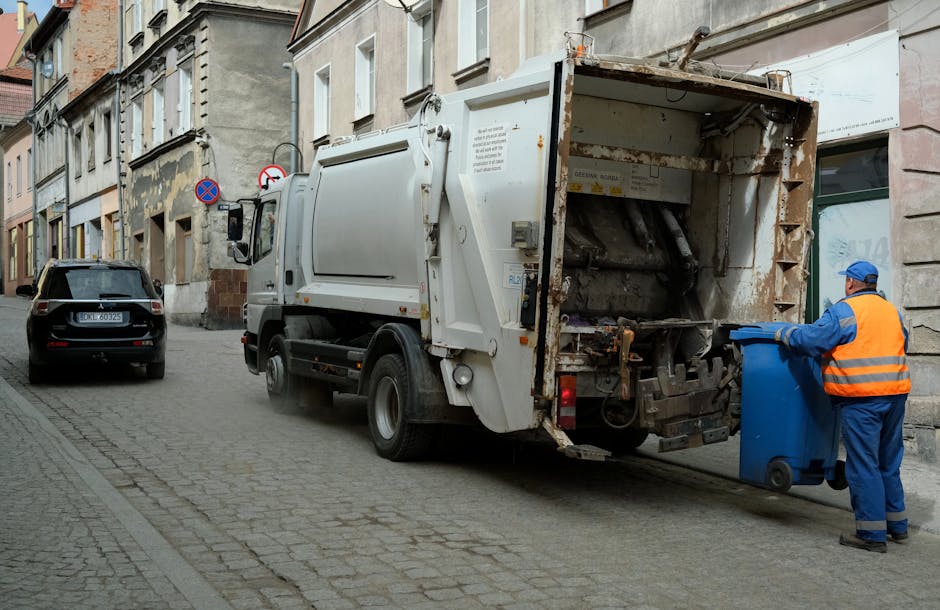
Top mistakes when hiring rubbish removal crew in SE London

If you are hiring a rubbish removal crew in SE London, the biggest mistakes usually happen before anyone even turns up. A rushed choice can lead to hidden charges, missed collections, damage in tight stairwells, or worse, waste being dumped somewhere it should never be. And in South East London, where parking is awkward, access is often narrow, and time is always tighter than you think, those mistakes tend to show up fast.
This guide breaks down the top mistakes when hiring rubbish removal crew in SE London in plain English. It explains what to look for, what to avoid, how a proper job should work, and the small details that make the difference between a smooth clearance and a very annoying day. Let's face it, nobody wants a van blocking the street at 8:15 a.m. while someone says, "oh, we didn't factor that in."
Whether you are clearing a flat, dealing with builders waste, removing an old sofa, or emptying a garage after years of "I'll sort that later", this article will help you choose more confidently. It also includes practical checks, a comparison table, and a checklist you can use before you book.
Quick takeaway: the best rubbish removal crew is not always the cheapest or the fastest. It is the one that is clear about pricing, access, waste handling, timing, and what happens if the job turns out to be bigger than expected.
Why Top mistakes when hiring rubbish removal crew in SE London Matters
Hiring the wrong crew costs more than money. In SE London, the knock-on effects can include blocked access, noisy delays, extra vehicle charges, skipped items, and the stress of chasing a team that has already moved on to the next job. If the clearance is tied to a move, renovation, landlord handover, or end-of-lease deadline, those issues get expensive quickly.
There is also a trust angle. Rubbish removal seems simple on the surface, but the reality is more layered. Different waste types need different handling. A mixed load from a flat in Peckham is not the same as garden waste from Forest Hill or office clearance in Waterloo. A crew that understands access, item lifting, sorting, and disposal is far more likely to complete the job properly the first time.
And then there is the less visible risk: who is actually taking your waste away? If a crew is vague about disposal methods, carries no clear paperwork, or seems oddly uninterested in what happens after collection, that is a red flag. You do not want your old furniture or builders debris ending up as someone else's problem in a field, alley, or lay-by. Truth be told, that is the kind of mess nobody wants attached to their address.
Good hiring habits protect you from all of that. They also help you compare quotes fairly, rather than comparing one vague promise against another vague promise.
How Top mistakes when hiring rubbish removal crew in SE London Works
A proper rubbish removal service usually follows a straightforward pattern: you describe the load, the crew assesses access and volume, they confirm the price or estimate, they collect the waste, then they transport it for sorting and disposal. Simple enough. The problems start when any of those steps are guessed rather than confirmed.
For example, a crew might quote for "a few items" but arrive to find a full storage room and no lift. Or a customer might assume everything can be taken in one go, only to learn there are restrictions on certain waste types. The job may still be completely doable, but the original assumptions no longer hold. That is where misunderstandings turn into extra charges.
In local areas with tight streets and parking pressure, timing and access are a big part of the service. A team working around Southwark, Lambeth, or Greenwich may need to factor in loading distances, stairs, waiting time, or permit-sensitive parking. If that is not discussed up front, the job can get messy before the first bag is lifted.
That is why the best crews ask practical questions early. What are you clearing? How many floors? Any lifts? Any heavy items? Is it a household load, garden waste, office clearout, or builders waste? For anyone comparing a rubbish removal service with a broader waste removal option, the exact scope matters more than the wording on the website.
Key Benefits and Practical Advantages
When you hire the right rubbish removal crew, the benefits are immediate. You save time, reduce stress, and avoid doing heavy lifting yourself. More importantly, you get a cleaner handover and fewer surprises mid-job.
- Clearer pricing: fewer last-minute additions because the job was assessed properly.
- Safer handling: less risk of damage to walls, stairwells, floors, or communal areas.
- Better time management: the crew arrives prepared for the access and load size.
- Less sorting stress: the team knows what can and cannot go together.
- More predictable outcomes: you know what is happening from start to finish.
There is another benefit people often overlook: peace of mind. If you are dealing with an emotional clear-out, such as a home clearance after a family change or a property reset before sale, the last thing you need is a contractor who creates more friction than they remove. A calm, organised crew makes the whole job feel more manageable.
That is especially useful for larger or more varied clearances, like a home clearance, a flat clearance, or a full house clearance. Each one benefits from proper planning and honest communication.
Who This Is For and When It Makes Sense
This topic matters to almost anyone booking waste collection in South East London, but it is especially relevant if you are:
- moving out of a flat or house and need a fast turnaround
- clearing furniture, including bulky items like sofas and wardrobes
- handling builders waste after a renovation or repair job
- emptying a garage, shed, loft, or storage room
- managing waste for a small business or office
- dealing with garden waste after a seasonal tidy-up
If that sounds familiar, you are not alone. A lot of people wait until the pile becomes annoying enough to notice every time they walk past it. Then the task becomes urgent. That is perfectly normal, by the way. Life gets busy. The trick is not to let urgency push you into a bad booking.
Someone in Brockley clearing a compact terrace is likely to need a different setup from a landlord in Eltham dealing with several bulky items and bagged waste. A crew that can adjust to the job type is worth much more than one that simply says yes to everything.
Step-by-Step Guidance
Here is a practical way to book the right crew without overcomplicating it.
- List exactly what needs removing. Include bulky items, bagged waste, broken furniture, and anything awkward or heavy.
- Check access details. Think stairs, parking, lift access, basement storage, gated entry, or long carrying distance.
- Ask how pricing works. Is it based on load size, labour, access, item type, or a combination?
- Confirm what the crew will not take. This saves time and avoids awkward arrival-day surprises.
- Discuss timing clearly. Morning slots, same-day jobs, and weekend work all affect coordination.
- Ask where waste goes. A professional outfit should be able to explain the process simply and without fuss.
- Get everything agreed before booking. Even a short written summary is better than relying on memory.
That last point matters more than people think. When a quote is only spoken through a phone call while someone is half in a van, details can drift. A short written confirmation makes the job easier for everyone.
For special cases, it helps to choose the right service type from the start. For instance, builders waste is not the same as sofa disposal, and office clearance is not the same as a garage clear-out. If your project is renovation-related, the dedicated builders waste page is a more natural fit. If you are getting rid of a couch or two, the sofa removal option may be more relevant.
Expert Tips for Better Results
Here are the habits that usually separate a smooth clearance from a frustrating one.
- Be brutally specific about volume. "A few bags" and "a pile in the hallway" can mean very different things.
- Send photos if the crew asks. Good photos save time and reduce guesswork.
- Describe access in ordinary language. For example, "second-floor flat, no lift, narrow stairwell, parking outside is hit or miss." That tells the story quickly.
- Separate anything you are keeping. It sounds obvious, but one small mistake can get expensive very fast.
- Ask what happens if more turns up. Real homes and real jobs often produce a surprise or two.
A small practical detail: if the clearance is happening during a busy street slot, the crew may need a little more time than you expect. Not because they are slow, but because life in SE London can be a bit stop-start. Cars double-park. Neighbours chat. A lift gets stuck on the third floor. It happens.
Also, the best crews tend to be comfortable explaining things without jargon. If someone talks in circles about "capacity optimisations" and "logistics windows", that is not always a bad sign, but it can be a sign they are trying to sound grand when a plain answer would do. You want clarity, not theatre.
Common Mistakes to Avoid
This is the heart of the issue. If you avoid these mistakes, you will already be ahead of most people booking waste clearance.
1. Choosing only on price
The cheapest quote can become the most expensive job if it excludes labour, access issues, or disposal detail. A low number looks great until the crew adds extras on arrival.
2. Failing to describe the job properly
If you say "just a bit of rubbish" and the crew arrives to find a full room of furniture and mixed waste, the quote was never really a quote. It was a guess.
3. Ignoring access problems
Steps, tight hallways, no parking, and long walking distances all affect the job. In flats, especially, access can change everything. That is one reason people booking garage clearance or furniture disposal services should be very clear about where items are located.
4. Not asking about disposal
You do not need a lecture. You do need a basic explanation of how the waste is handled and whether the team is properly set up for the material they are collecting.
5. Assuming every job is the same
A small bag collection, an office clear-out, and a garden tidy-up all sound simple. In reality, they can involve different loading, sorting, and time requirements. If you need garden clearance, for example, soil, branches, and green waste may need a different approach from old office chairs or boxes.
6. Forgetting to confirm timing
"Around lunchtime" is not a plan. If you need the collection before surveyors arrive, a landlord inspection, or a renovation start, get the slot pinned down properly.
7. Overlooking household or business sensitivity
Some clearances feel routine. Others involve private paperwork, sentimental items, client equipment, or stock. If you are managing a commercial space, a dedicated business waste or office clearance arrangement can make more sense than a generic rubbish job.
Tools, Resources and Recommendations
You do not need special equipment to book a good rubbish removal crew, but a few simple tools help a lot.
- Phone camera: take wide photos of the items and the route out of the property.
- Simple notes app: list what stays, what goes, and any access restrictions.
- Basic measuring tape: useful if there is a bulky item, tight doorway, or awkward staircase turn.
- Calendar reminder: helpful for collection windows, especially if someone needs to be present.
On the service side, it helps to understand the difference between common collection types. Rubbish collection usually suits straightforward pickup of mixed items. Waste collection can be a broader term used for bagged, sorted, or recurring loads. Waste disposal is the end point, and it is worth asking about that in ordinary terms rather than assuming everything disappears by magic. Spoiler: it does not.
If you are unsure whether your job is a one-off or a broader property clearance, it may be worth comparing it with a rubbish clearance service or a more structured waste clearance booking. The wording matters less than the actual scope, so ask the crew to interpret the load rather than guessing yourself.
Law, Compliance, Standards, or Best Practice
Without getting overly legal about it, there are a few sensible standards to keep in mind in the UK. Waste should be handled responsibly, and the crew should be able to explain their process in a way that sounds consistent and professional. If something feels vague, trust that instinct.
Best practice usually includes clear pricing, safe lifting, proper vehicle loading, and sensible disposal handling. It also means the crew should not ask you to do anything that feels unsafe, like dragging heavy furniture down a stairwell alone or carrying sharp debris without protection. That is not a good sign, even if the quote was tempting.
For businesses and landlords, the standard should be a little higher again. You want predictable arrival times, tidy loading, and a crew that understands the difference between domestic clutter and commercial waste. If the job is tied to a tenancy changeover, lease end, or premises reset, check the terms carefully and keep expectations plain.
If you want reassurance, look for straightforward service pages and transparent company information. The about us page can help you understand who you are dealing with, while the terms and conditions and privacy policy pages are useful for the less glamorous but still important details. Not exciting, admittedly, but worth a quick read.
Options, Methods, or Comparison Table
If you are weighing up how to book the job, this simple comparison may help.
| Option | Best for | Pros | Watch out for |
|---|---|---|---|
| Cheapest quote only | Very small, simple loads | Looks budget-friendly at first | Hidden extras, unclear scope, rushed service |
| Photo-based estimate | Mixed household or bulky item jobs | Better accuracy, quicker booking | Photos must be honest and complete |
| In-person assessment | Large clearances or awkward access | Most reliable for complex jobs | Takes more time to arrange |
| Specialist service type | Builders waste, office, garden, furniture | More suitable equipment and planning | You need to choose the right category |
If the job involves renovation debris, go with the most relevant route rather than forcing it into a generic rubbish description. If it is a mixed domestic clear-out, a broader waste removal or rubbish removal booking may be more practical. There is no prize for making it harder than it needs to be.
Case Study or Real-World Example
A fairly typical SE London scenario goes like this. A couple in a top-floor flat near Peckham Rye books a crew to remove a sofa, a bed frame, a broken chest of drawers, and several sacks of old household bits. They choose a quote mostly because it is the lowest. Nice and simple, or so they think.
On the day, the crew arrives and realises the stairwell is narrow, there is no lift, parking is not close, and two of the items are much heavier than described. The original price no longer makes sense. The couple feels pressured, the crew feels rushed, and the job becomes tense for no real reason. Nobody enjoys that.
Now compare that with a better approach. The couple sends photos, mentions the stairs, says parking is limited, and confirms that the sofa needs careful carrying through a tight landing. The crew gives a clearer price and arrives prepared. The job takes longer than a ground-floor pickup, but it runs smoothly. No drama. No guessing. Just a decent, professional clearance.
That is the real lesson here: accurate information makes the whole job cheaper in the long run, even if the first quote looks a bit higher. It usually pays off.
Practical Checklist
Use this quick checklist before booking a rubbish removal crew in SE London:
- Have I listed everything that needs removing?
- Have I mentioned stairs, lifts, parking, and access constraints?
- Have I sent photos if needed?
- Do I understand how the price is calculated?
- Have I checked whether any items need a specialist service?
- Have I confirmed timing and the arrival window?
- Do I know what happens if the load is larger than expected?
- Have I asked what waste types are accepted?
- Have I checked the company information and terms?
- Am I comfortable that the crew sounds clear, not evasive?
Best quick rule: if the booking process feels vague before the job starts, it usually gets vaguer later. That is the sort of thing experience teaches you the hard way, and ideally you never have to learn it at all.
Get a free quote today and see how much you can save.
Conclusion
The top mistakes when hiring rubbish removal crew in SE London usually come down to the same few things: unclear descriptions, poor access planning, chasing the lowest price, and not asking what happens behind the scenes. None of that is glamorous, but it is exactly where jobs succeed or fall apart.
If you remember one thing, make it this: good rubbish removal is less about luck and more about clarity. Know what you need removed, explain the access properly, ask sensible questions, and choose a crew that answers in plain English. That one habit will save time, money, and a fair bit of annoyance.
And if you are sorting it all out today, don't overthink every tiny detail. Just get the facts straight, ask the right questions, and move forward one step at a time. That is usually enough.
Frequently Asked Questions
What are the most common mistakes when hiring rubbish removal crew in SE London?
The biggest mistakes are choosing only on price, giving a vague description of the load, ignoring access issues, and not checking what is included in the quote. Those are the ones that cause the most frustration.
How do I know if a rubbish removal quote is fair?
A fair quote should reflect the size of the load, the type of waste, labour time, access difficulty, and any special handling needed. If the price feels unusually low, ask what is excluded before you book.
Should I send photos before booking a crew?
Yes, if the company asks for them. Photos are one of the simplest ways to avoid misunderstandings, especially for bulky items, stair-only flats, or mixed waste loads.
Is same-day rubbish removal a good idea?
It can be, if the load is simple and the crew has the right information. For more complicated jobs, same-day booking can be risky because there is less time to confirm access and scope properly.
What should I ask before hiring a rubbish removal team?
Ask what is included, how pricing works, what waste types they take, whether access affects the price, and what happens if the job is bigger than expected. Simple questions, but they reveal a lot.
Why does access matter so much in SE London?
Because many properties have stairs, limited parking, narrow entrances, or awkward loading points. In SE London, access can affect time, labour, and cost more than people expect.
Can rubbish removal crews take furniture and sofa items?
Usually yes, if the service covers bulky item removal. For specific items such as a sofa, it is worth checking whether the crew offers a more suitable sofa removal option.
What is the difference between rubbish removal and waste removal?
In everyday use, the terms overlap a lot. The difference is usually in how the service is presented and what types of material it is set up to handle. Always check the scope rather than relying on the label alone.
Do I need a specialist crew for builders waste?
Often, yes. Builders waste can include heavier, messier, or more awkward debris than normal household rubbish, so a dedicated builders waste service is usually the better fit.
How can I avoid hidden charges?
Be exact about the items, the number of floors, parking, timing, and whether the load might grow on the day. Hidden charges usually appear when the original scope was too vague.
What if I need a full flat or house cleared?
Then you should discuss the job as a clearance rather than a few loose items. Services like flat clearance and house clearance are usually more suitable for larger jobs with varied contents.
Are business waste jobs handled differently from home jobs?
Often, yes. Business waste can involve recurring collections, privacy concerns, stock items, or office furniture. A business waste or office clearance approach is usually more appropriate.
What is the best way to prepare for collection day?
Keep the items accessible, separate anything you are keeping, clear a route if possible, and make sure someone is available if the crew needs access confirmation. A little prep goes a long way, honestly.