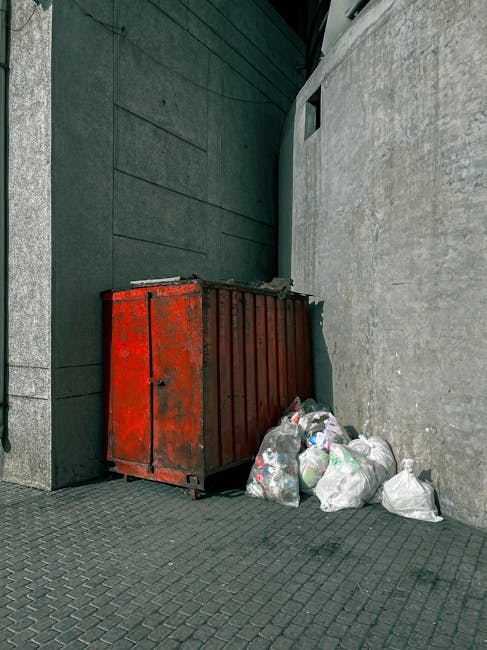
Lewisham Council fines avoided with proper rubbish disposal
If you live, work, or manage property in Lewisham, rubbish can become expensive in a very ordinary sort of way. A bag left beside the wrong bin, a sofa dumped "just for a night", or builders' rubble put out without planning can quickly turn into avoidable hassle. This guide explains how Lewisham Council fines avoided with proper rubbish disposal actually works in practice, what usually goes wrong, and how to stay on the right side of local expectations without making the process harder than it needs to be. The aim is simple: fewer problems, cleaner streets, and no nasty surprise at the end of the week.
Truth be told, most fines are not caused by dramatic fly-tipping stories. They usually start with small, messy decisions. A skipped collection, an overloaded car boot, a broken chest of drawers left in a communal hallway. You know the sort of thing. The good news? With a little planning and the right disposal route, you can avoid all that and keep your home, flat, or business running smoothly.
Table of Contents
- Why this matters in Lewisham
- How proper rubbish disposal helps you avoid fines
- Key benefits and practical advantages
- Who this is for and when it makes sense
- Step-by-step guidance
- Expert tips for better results
- Common mistakes to avoid
- Tools, resources and recommendations
- Law, compliance, standards and best practice
- Options and comparison table
- Case study or real-world example
- Practical checklist
- Conclusion
- Frequently asked questions
Why Lewisham Council fines avoided with proper rubbish disposal Matters
Proper rubbish disposal matters because waste is not just "stuff to get rid of". In a borough like Lewisham, it affects pavement access, communal safety, pest control, neighbour relations, and the overall look and feel of an area. If waste is left in the wrong place, or handed to the wrong person, it can become your responsibility again even after you thought the job was done.
That is the bit people often miss. They assume disposal ends when the rubbish leaves their front door. In reality, the risk continues until it is collected, handled, and disposed of correctly. If the material is later dumped somewhere it should not be, questions can come back to the original owner or occupier. Not always, but enough that it is worth taking seriously.
There is also a practical side. A proper disposal plan saves time, avoids repeated trips to recycling sites, and reduces stress when you are clearing a home, replacing furniture, or finishing a renovation. If you have ever stood in a hallway with an old wardrobe and thought, "Right, now what?", you already know why this topic matters.
Key point: the cheapest option on paper is not always the cheapest option overall. A quick, careless disposal choice can become a far more expensive problem later.
How Lewisham Council fines avoided with proper rubbish disposal Works
At a simple level, avoiding fines is about matching the waste to the correct disposal route. Different materials need different handling. A black bag of household waste is not the same as broken plasterboard. A sofa is not the same as garden cuttings. And commercial waste should not be treated like a casual afterthought from a home clear-out.
The process usually works like this:
- Identify the waste type. Household rubbish, bulky furniture, garden waste, builders' waste, office waste, and mixed waste all need different thinking.
- Separate what can be reused or recycled. Even a basic sort can reduce volume and make disposal easier.
- Choose a lawful disposal route. That may mean council collection, a licensed waste carrier, a recycling facility, or a specialist clearance service.
- Keep a record of what was removed. For businesses and landlords especially, this is sensible housekeeping.
- Make sure it actually leaves your responsibility. This is where reputable collection and disposal methods matter most.
For many people, the easiest route is to use a service that handles collection and disposal together, rather than trying to juggle transport, loading, and drop-off themselves. If you are dealing with mixed items, a practical starting point is a service like rubbish removal or waste disposal, because it reduces the chance of making a costly mistake mid-process.
And yes, the details matter. Waste left beside a communal bin because "it will probably be fine overnight" is exactly the sort of thing that can cause trouble. London moves fast; rubbish left behind tends to move faster, and not always in the direction you hoped.
Key Benefits and Practical Advantages
A proper disposal routine is not only about avoiding enforcement action. It brings a handful of very real benefits that are easy to appreciate once you have dealt with the mess once or twice.
- Lower risk of penalties: the obvious one, but still the most important.
- Less neighbour conflict: particularly in flats and shared entrances where one person's clutter becomes everyone's problem.
- Cleaner shared spaces: hallways, front gardens, and loading areas stay usable.
- Faster clear-outs: a planned disposal process saves repeat trips and last-minute panic.
- Better sorting and recycling: reusable items can be separated more easily.
- Reduced stress: there is a big difference between "sorted" and "still in the way".
There is also a subtle benefit that people do not talk about enough: a good disposal habit makes future jobs easier. The next time you clear a garage, office, or rental flat, you will already know what to do and what to avoid. That alone can save a Saturday, which is no small thing.
If you are handling a larger job, related services like house clearance, flat clearance, or office clearance can make the whole process cleaner and more controlled.
Who This Is For and When It Makes Sense
This topic is relevant to a lot more people than you might expect. In Lewisham, the most common situations tend to be everyday and very human: moving house, replacing furniture, finishing building work, clearing a garden, or trying to get a rental property ready for the next occupant.
You will likely need this guidance if you are:
- a homeowner with bulky or mixed household waste;
- a tenant clearing a flat before moving out;
- a landlord or letting agent managing end-of-tenancy rubbish;
- a tradesperson dealing with builders' waste;
- a small business dealing with office or shop waste;
- someone clearing a garage, shed, loft, or garden;
- a family member helping with a bereavement or sensitive home clearance.
It also makes sense when time is tight. If a council collection slot is not enough, or you simply do not have the vehicle, lifting help, or patience for a DIY tip run, a more structured service is usually the smarter move. No shame in that. In fact, it is often the safest move.
For awkward bulky items, furniture disposal and sofa removal can be especially useful because they remove the "how do I even get this out the door?" problem.
Step-by-Step Guidance
If you want to avoid fines and keep the process under control, use this straightforward approach. Nothing fancy. Just a sensible sequence that works.
- Do a quick waste audit. Walk through the property and list what needs to go. Separate bulky items, general rubbish, green waste, and anything from work or renovation.
- Remove reusable items first. Donate, store, or sell anything with a second life. Less volume means fewer headaches.
- Keep hazardous or awkward items separate. Paint, chemicals, sharps, and anything potentially dangerous should never be dumped with ordinary rubbish.
- Check access points. Stairs, lifts, narrow hallways, parking, and timed loading restrictions can all affect how waste should be removed.
- Choose the right collection method. For a small amount, scheduled collection might be enough. For mixed or bulky waste, a clearance team is often easier.
- Confirm where the waste is going. Ask whether the material will be recycled, reused, or disposed of through the correct route.
- Keep any paperwork or confirmation. This is particularly useful for businesses, landlords, and tradespeople.
Small jobs can be handled through rubbish collection or waste collection. Larger or more varied loads are usually better suited to waste removal or waste clearance.
One tiny but important detail: do not leave it until the last possible day. If you are moving out on Friday and the waste is still sitting there on Thursday night, that is how people end up improvising. And improvising with rubbish is, frankly, rarely a good look.
Expert Tips for Better Results
After dealing with enough clear-outs, a few patterns become obvious. The best results usually come from being organised before the lift gates open or the van arrives.
- Sort by material, not just by room. Wood, metal, cardboard, textiles, and green waste are easier to manage when separated early.
- Keep pathways clear. It sounds obvious, but blocked hallways slow everything down and create trip hazards.
- Photograph awkward loads before collection. Handy for internal planning and for avoiding confusion later.
- Use one staging area. It is easier to remove waste in one controlled pile than from four different corners of the property.
- Think about the building before the waste. Flats, shared entrances, and top-floor properties need a different approach from a driveway in a terraced house.
- Ask how mixed waste will be handled. A responsible clearance provider should be able to explain the process in plain English.
For garden-heavy clear-outs, garden clearance can save a lot of back-and-forth. For renovation work, builders' waste is best handled separately so rubble, timber, plasterboard, and packaging do not become a single awkward heap.
Expert summary: if waste is planned properly, it feels almost boring. That is a good thing. Boring rubbish disposal usually means no fines, no drama, and no surprise mess at the end.
Common Mistakes to Avoid
The mistakes are usually small, which is what makes them so annoying. They do not feel serious in the moment. Then they are.
- Leaving bags beside bins: even for a short time, this can create the appearance of illegal dumping.
- Assuming "someone will take it": if waste is handed to an unlicensed collector, problems can follow.
- Mixing everything together: recyclable items, furniture, and builders' waste become much harder to manage when they are tangled up.
- Forgetting communal rules: flats and managed buildings often have specific waste arrangements.
- Using the wrong vehicle or too few trips: overloaded cars are not a solution, just a future problem.
- Not checking access and timing: loading bays, permits, and time windows can trip you up if ignored.
Another common error is underestimating volume. A spare room can look harmless until you start moving things. Then suddenly there are three broken chairs, a mattress, a bag of clothes, two old monitors, and a box full of cables that nobody has looked at in years. Funny how that happens.
If you are unsure, err on the side of proper clearance rather than a quick fix. It is better to ask once than to deal with a penalty later.
Tools, Resources and Recommendations
You do not need a complicated toolkit, but a few simple things make waste disposal much easier and safer.
- Heavy-duty bags and boxes: useful for sorting small items and protecting sharp edges.
- Labels or marker pens: a quick way to mark recycling, reuse, and disposal piles.
- Gloves: practical for dusty lofts, garages, and gardens.
- Tape measure: helpful for bulky items that need to fit through doors or into lifts.
- A camera phone: good for recording item condition, access issues, or load size.
- A simple checklist: often the most useful tool of all, to be fair.
For common household and property-clearance jobs, these services are the most practical starting points: home clearance, garage clearance, and house clearance. If you are clearing from a smaller property, flat clearance is often the better fit because access and storage space are usually tighter.
For local context and broader service planning, you may also find the South East London service area useful when you are comparing nearby collection options.
Law, Compliance, Standards, or Best Practice
Waste disposal in the UK sits within a legal and practical framework that expects waste to be handled responsibly. You do not need to become a legal specialist to stay safe, but you should understand the basics. The main idea is simple: you remain responsible for waste until it is passed to someone authorised to handle it.
For businesses, landlords, and anyone arranging regular removals, it is especially sensible to work with clear records and a consistent process. That means knowing what the waste is, where it came from, who collected it, and how it was managed. This is not bureaucracy for the sake of it. It is the paper trail that protects you if questions are ever raised later.
Best practice also means:
- using a reputable collector for bulky or mixed waste;
- avoiding casual handovers to unknown drivers;
- separating recyclable materials where practical;
- keeping communal areas tidy during the removal process;
- making sure waste does not block pavements, entrances, or shared spaces.
If you run a business, the expectations are a little sharper. A tidy back area and a reliable business waste arrangement are not optional extras. They are part of keeping the place lawful, presentable, and easy to work in.
For offices, the same logic applies. Office clearance should be handled carefully because desks, electronics, and paperwork can create both waste and data-handling concerns. Different issue, same need for care.
Options, Methods, or Comparison Table
There are a few ways to dispose of rubbish in Lewisham, and the right one depends on volume, time, item type, and how much lifting you want to do yourself.
| Method | Best for | Pros | Watch-outs |
|---|---|---|---|
| Regular household bin use | Small daily waste | Simple, familiar, usually the cheapest option | Not suitable for bulky, hazardous, or excess waste |
| DIY transport | One-off small loads | Flexible if you have the right vehicle | Time-consuming, lifting risk, poor for heavy or awkward items |
| Specialist collection | Bulky, mixed, or hard-to-move items | Convenient, faster, less stress | Needs careful booking and clear access details |
| Full clearance service | House, flat, office, or estate clear-outs | Best for larger jobs and mixed waste | Requires good planning so nothing is missed |
In most real situations, the decision comes down to one question: do you want to spend your time moving rubbish, or do you want the space back quickly and properly? There is no wrong answer, but there is a wiser one when the job gets large.
If you are moving bulky furniture, furniture disposal and sofa removal are often more practical than trying to squeeze everything into a car. Likewise, rubbish clearance can be a good all-round option when the load includes a bit of everything.
Case Study or Real-World Example
A typical Lewisham scenario goes like this. A couple moves out of a rented flat and suddenly realises the spare room contains old shelving, a broken bedside table, a mattress, several bags of mixed clutter, and a few bits from a small DIY refresh. The building has a narrow staircase, no lift, and limited roadside space. Not ideal.
At first, they think they can do it in two car trips. Then reality arrives. The mattress is awkward, the shelving is dustier than expected, and the bags are heavier than they looked in the corner. Instead of forcing it, they sort the items, separate reusable bits, and arrange a proper collection. The waste is taken away in one go, the hallway is left clear, and the tenancy handover is much calmer.
What did they avoid? Most of the usual problems: blocked shared areas, rushed loading, and the temptation to leave one or two bits "for later". That last bit is always the danger. Later has a habit of becoming tomorrow, and tomorrow becomes a complaint.
This is the practical value of proper disposal. Not theory. Not slogans. Just less friction in a very ordinary, very busy week.
Practical Checklist
Use this checklist before anything leaves the property.
- Have you identified the waste type correctly?
- Have you separated reusable or recyclable items?
- Are bulky items measured and checked against doorways or lifts?
- Have you confirmed access, parking, and timing?
- Do you know whether the waste needs a specialist collection?
- Are hazardous items kept apart from general rubbish?
- Have you arranged a lawful disposal route?
- Do you have any records or confirmation you may need later?
- Are communal areas protected during removal?
- Has someone double-checked the space so nothing is accidentally left behind?
If you can tick most of those off, you are in a much stronger position. If not, pause and sort the plan first. A short delay is annoying. A fine is worse.
Conclusion
Lewisham Council fines avoided with proper rubbish disposal is really about one thing: doing the job properly before it becomes a problem. The rule of thumb is simple enough. Separate the waste, choose the right collection method, keep records where sensible, and never assume a bag left out of place will sort itself out.
Whether you are clearing a flat, emptying a garage, dealing with builders' waste, or shifting bulky furniture, the safest path is usually the most organised one. It is not glamorous. It is just effective. And in waste disposal, effective is what you want.
Get a free quote today and see how much you can save.
With the right approach, you protect your property, save time, and keep the whole process far less stressful than it first looks. That peace of mind is worth a lot, really.
Frequently Asked Questions
What counts as proper rubbish disposal in Lewisham?
Proper rubbish disposal means putting waste into the correct collection or disposal route for the material, rather than leaving it in a shared area, handing it to an unknown collector, or mixing everything together without checking what should happen next.
Can I leave rubbish beside the bin if it does not fit inside?
Usually, no. Leaving waste beside bins can create a nuisance, attract complaints, and increase the risk of the material being treated as dumped. If you have excess waste, arrange an appropriate collection instead.
How do I know whether I need a clearance service or just a normal collection?
If the waste is bulky, mixed, heavy, or awkward to move, a clearance service is often better. If it is a small amount of general waste, a simple collection may be enough. Access and time matter too.
What should I do with old furniture in a Lewisham property?
Old furniture should be removed through a proper disposal route. For larger items like sofas, beds, or wardrobes, a dedicated furniture disposal or sofa removal service is usually the easiest option.
Is it risky to use an unlicensed waste collector?
Yes, it can be. If waste is fly-tipped after being handed over, responsibility can become complicated. It is much safer to use a reputable service with a clear disposal process.
Do landlords need to keep records for waste removal?
It is sensible to do so. Keeping records helps show that waste was handled properly, especially during void periods, refurbishments, or end-of-tenancy clearances.
What kind of waste is hardest to dispose of safely?
Mixed waste, builders' waste, and bulky furniture usually create the most problems because they are awkward to move and may need sorting before disposal. Hazardous materials need extra care too.
Can garden waste be mixed with general rubbish?
It can be, but it is not ideal. Separating garden waste often makes collection easier and may help with recycling or disposal planning. A dedicated garden clearance is usually cleaner.
What if I have waste from a small renovation project?
Builders' waste should be handled separately where possible. Materials like timber, rubble, packaging, and plasterboard can be managed more efficiently when sorted before collection.
How can I reduce the chance of a fine during a house move?
Plan the clearance early, remove bulky items in advance, keep communal areas clear, and use the right disposal route for anything that does not fit normal household rubbish. Last-minute improvisation is where things go wrong.
Are business waste rules different from household waste rules?
Yes, in practice they are. Business waste should be managed more carefully, with records and a reliable collection process. It is one of those areas where a tidy system pays for itself quickly.
What is the best first step if I am not sure what to do with my rubbish?
Start by sorting the waste into simple categories: general rubbish, bulky items, recyclables, garden waste, and anything from building or office use. Once that is clear, choosing the right service becomes much easier.
Is a flat clearance different from a house clearance?
Yes. Flat clearance often involves tighter access, more stairs, shared entrances, and stricter loading considerations. House clearance can be more straightforward, but the volume is often larger. Both need a proper plan.
Why does proper disposal matter even for small amounts of waste?
Because small amounts still create risk if they are left in the wrong place or handled badly. A single bag can cause a complaint just as quickly as a larger load. Small job, same principle.