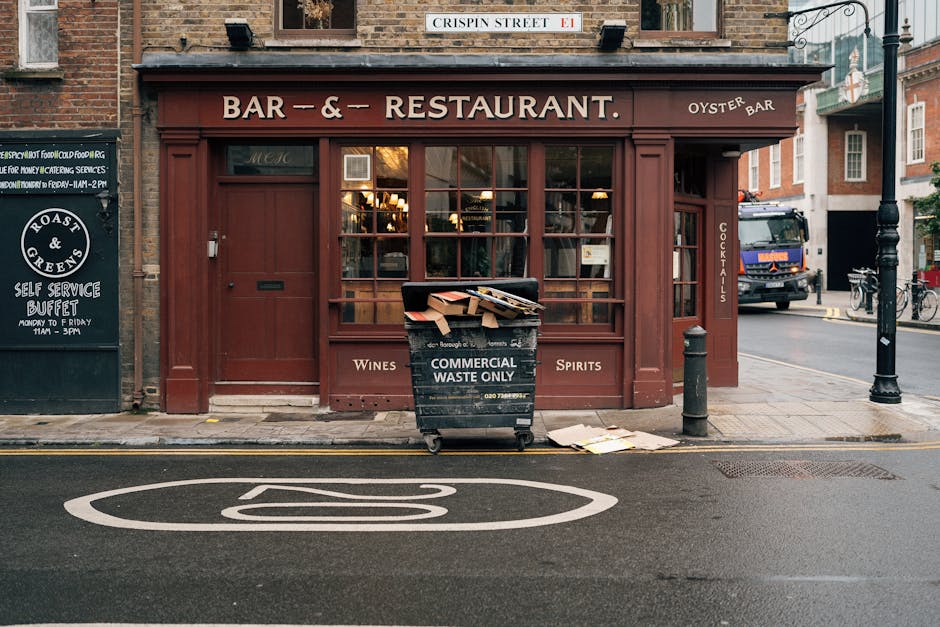
Deptford Dockyard Rubbish Removal for Ground Floor Shops Flats
If you need Deptford Dockyard rubbish removal for ground floor shops flats, you are probably dealing with a space that is busy, awkward to access, and not forgiving when waste starts building up. A ground floor shop, cafe back room, workshop unit, or flat entrance can go from tidy to chaotic very quickly. One pile of packaging, broken shelving, old stock, or renovation debris and suddenly the front area feels tight, unwelcoming, and hard to work in.
This guide breaks down how rubbish removal works in this part of Deptford, what makes ground floor premises different, and how to choose a sensible, low-stress approach. We will also look at practical timing, access issues, compliance, and the little details that matter in real life. Because let's face it, rubbish is rarely just rubbish. It is also space, safety, customers, neighbours, and time.
Whether you run a shopfront, manage flats at street level, or simply need a one-off clear-out without the drama of a skip outside, the aim here is to help you make a clean decision. Not a guess. Not a rushed booking that turns messy later. A proper, workable plan.
- Why it matters in Deptford Dockyard
- How the service works
- Key benefits and practical advantages
- Who this is for and when it makes sense
- Step-by-step guidance
- Expert tips for better results
- Common mistakes to avoid
- Tools, resources and recommendations
- Law, compliance and best practice
- Options and comparison
- Real-world example
- Practical checklist
- Conclusion
- Frequently asked questions
Why Deptford Dockyard rubbish removal for ground floor shops flats Matters
Ground floor premises in Deptford Dockyard tend to have one thing in common: they are visible, accessible, and usually close to foot traffic. That is helpful when you are trading, but not so helpful when rubbish is stacked near the doorway or squeezed into a shared entrance. A few black bags might not seem like much. Then a couple of broken displays, a flat-pack box mountain, and some old furniture show up, and the place starts to feel cramped.
For shop units, mess affects the customer experience. For flats, it affects living space, shared access, and sometimes even relations with neighbours. For both, it can become a fire safety issue if items are left in corridors, near exits, or in communal areas. And in busy areas around Deptford, you do not always get the luxury of waiting around for a convenient day. The street just keeps moving.
This kind of rubbish removal matters because it is about more than getting things out of sight. It is about keeping a ground floor frontage usable, safe, and presentable. It also helps reduce the little background stress that builds up when every corner has a pile of "we'll deal with that later" items. Truth be told, later has a funny way of becoming never.
For many local businesses and residents, a well-timed clearance can also prevent more expensive problems. Overfilled storage rooms, blocked access routes, and last-minute emergency clear-outs often cost more in time and disruption than a planned removal would have done in the first place.
How Deptford Dockyard rubbish removal for ground floor shops flats Works
The basic process is simple, but the best results come from a bit of planning. In most cases, rubbish removal for a ground floor shop or flat follows a straightforward pattern: assess the waste, decide what needs to go, arrange a collection, and clear the items efficiently without blocking access.
That sounds easy. And sometimes it is. But ground floor properties often come with awkward details. A narrow frontage, shared entryway, basement step, double doors that only open one way, or limited loading space can all affect how the job is handled. A proper collection team will think about that before lifting anything.
In practice, the service often includes a quick discussion about the type and amount of waste, access to the property, and whether items are loose, bagged, dismantled, or mixed. Builders' waste, furniture, cardboard, shop fittings, old fixtures, and general rubbish all need different handling. If a team knows what they are looking at beforehand, the job usually runs smoother. Less faff, less back-and-forth.
In some cases, the team can load waste directly from the ground floor entrance, which is ideal for shops and flats because it keeps disruption to a minimum. That is especially useful when the front of the property needs to stay open to customers or residents during the day. You do not want a collection that accidentally turns the entrance into a temporary obstacle course.
If you are sorting waste from a flat above or behind a shopfront, the best approach is often to group items by type and place them as close to the exit as practical. That makes collection quicker and helps reduce the chance of damage to walls, floors, or communal areas.
Key Benefits and Practical Advantages
There are a few clear reasons people choose a dedicated rubbish removal service instead of trying to manage it themselves. Some are obvious. Others only become obvious once you have tried to drag an old sofa down a narrow hallway on a wet Thursday afternoon.
| Option | Best for | Main advantage | Typical drawback |
|---|---|---|---|
| Professional rubbish removal | Mixed loads, awkward access, same-day clear-outs | Fast, flexible, little disruption | Can cost more than self-haul in simple cases |
| Skip hire | Larger projects with ongoing waste | Good for continuous disposal over several days | Needs space and may require permission |
| Self-disposal | Small volumes and access to a vehicle | Can be economical for light loads | Time-consuming and physically demanding |
The most immediate benefit is convenience. You do not need to hire a vehicle, lift heavy furniture yourself, or make multiple trips. That matters in Deptford, where parking, access, and timing can all be a bit of a puzzle.
Another big advantage is speed. Shops often cannot afford to lose trading space for long. Flats, especially ground floor ones, need walkways and doorways clear. A proper removal means the space becomes usable again the same day in many situations.
There is also the less glamorous but very real benefit of reducing stress. When rubbish is sorted, loaded, and removed in one go, the task stops hanging over you. No half-finished pile by the doorway. No "we'll do that next week" promise. Done, and that is that.
And for mixed-use buildings, professional clearance helps minimise friction. Residents, staff, landlords, and neighbours all prefer a straightforward process to a messy one. In busy urban streets, a tidy front is not a luxury. It is part of how the place functions.
Who This Is For and When It Makes Sense
This kind of service is a strong fit for a wide range of people and properties. If your unit is on the ground floor and waste can be moved out without stairs or lift access, you are already in a good position for a fast collection.
It is especially useful for:
- ground floor shops clearing old stock, shelving, packaging, or damaged goods
- small cafes, salons, takeaways, and convenience stores with back-room clutter
- landlords and managing agents dealing with abandoned items in ground floor flats
- tenants preparing for a move-out or end-of-tenancy handover
- shop fit-outs, refurbishments, or light strip-outs
- properties that cannot easily host a skip outside
It makes sense when the waste is too much for regular council collection, too bulky for a car boot, or too awkward to deal with alone. It also makes sense when timing matters more than saving a small amount by doing it yourself. For a business, that could mean before opening hours. For a flat, it could mean clearing a room before guests arrive or before decorators start. Simple, but useful.
A good rule of thumb: if the waste is blocking access, taking up revenue-producing space, or causing visual clutter that affects how the property feels, it is probably time to act. You do not need to wait until the situation is dramatic.
Step-by-Step Guidance
Here is a practical way to approach a ground floor clearance without turning it into a weekend project that drags on and on.
- Identify the waste types. Separate general rubbish, furniture, cardboard, electrical items, and any building debris. Mixed waste is fine, but knowing what you have helps with planning.
- Check access carefully. Measure door widths, note any steps, and think about where a vehicle could pause safely. This is where a five-minute look saves an hour later.
- Decide what stays and what goes. Be blunt here. If the item has been sitting unused for months and you are still "thinking about it", it may be time to let it go.
- Bundle or stage the items. Put smaller waste into bags or boxes and keep walkways clear. Do not block the door if customers or residents still need access.
- Book the collection. Choose a time that causes the least disruption. Early morning often works well for shops; mid-morning or early afternoon may suit flats better.
- Confirm any special handling. If there are bulky items, sharp materials, or anything unusually heavy, mention it in advance. That little bit of honesty saves hassle.
- Clear the route on the day. Move mats, obstacles, and loose items out of the way. It sounds minor, but it really helps the crew work safely and quickly.
- Do a final sweep. Check the frontage, hallway, and loading area once the waste has gone. A quick look catches forgotten bits like screws, packaging, or that one rogue shelf bracket.
If the property is a shop with a flat above or behind it, it can help to coordinate the route so the team does not cross customer areas unnecessarily. Small thing, but it keeps the day calm.
Expert Tips for Better Results
In our experience, the smoothest rubbish removals are the ones where the property owner or manager gives a little extra thought up front. Nothing dramatic. Just enough to make the job clean and predictable.
Tip one: group by weight and type. Heavy items like desks, display units, and broken furniture should be kept separate from loose bags of light rubbish if possible. It helps the crew load efficiently and reduces avoidable lifting.
Tip two: protect the entrance. If the frontage is finished nicely, place cardboard or temporary floor protection near the exit. That matters in small ground floor shops, where one muddy trolley wheel can leave a mark you notice for days.
Tip three: think about opening hours. A collection at the wrong time can annoy customers or tenants. Early windows often work best, but not always. Ask yourself: when is the space genuinely quiet?
Tip four: keep one person in charge. Too many people giving instructions is where small jobs get weird. One point of contact usually makes the whole thing far calmer. A tiny bit old-fashioned, maybe, but effective.
Tip five: don't hide the awkward bits. If there is wet waste, broken glass, or a heavy item wedged in a corner, say so. You are not being difficult. You are being helpful.
Tip six: plan the end state. The best clear-outs are not only about removal. They also create a more usable room. If the space will be redecorated, stocked, rented out, or used differently, think about that before the rubbish goes. It can save a second clear-out later.
One more thing: if you are clearing a shop and you are tempted to keep every shelf, sign, and old display stand "just in case", pause for a second. Just because it once held stock does not mean it deserves prime real estate forever.
Common Mistakes to Avoid
Most problems with ground floor rubbish removal are avoidable. The issue is usually not bad luck. It is one small oversight that snowballs.
- Leaving waste until the last minute. Rushed clear-outs are more stressful and often more expensive because they limit your options.
- Blocking shared access. In flats, hallways and entrances need to stay usable. In shops, you still need room for customers and staff.
- Underestimating volume. Waste always seems smaller when it is stacked neatly. Once lifted, it can be a different story entirely.
- Mixing materials carelessly. Cardboard, general rubbish, wood, and electrical items are easier to manage when they are not all shoved into one mystery pile.
- Not checking for restricted items. Some items need special handling. If you are unsure, ask before collection day.
- Forgetting neighbours or other occupiers. A quick heads-up goes a long way in shared buildings. Nobody likes surprise noise first thing in the morning.
The biggest mistake is probably assuming the job is "small enough" to sort later. That phrase has caused more clutter than people realise. It really has.
Tools, Resources and Recommendations
You do not need specialist kit for most clear-outs, but a few practical tools make life easier. Think simple, not fancy.
- Heavy-duty rubbish bags for loose mixed waste
- Strong boxes or crates for shop waste, paper, and packaging
- Marker pens and tape for labelling items to keep, move, or remove
- Gloves and sturdy footwear if you are doing any sorting yourself
- Measuring tape for access points and bulky furniture
- Basic protective sheeting or cardboard for entrances and floors
It can also help to look at related waste services if your job includes more than simple bagged rubbish. For example, furniture-heavy clearances may pair well with furniture disposal, while more mixed loads from a business premises may sit better under business waste or broader waste removal support.
If you are dealing with a property that is more like a compact home than a commercial unit, the site's flat clearance service may be a closer fit. And for general mixed rubbish, the clearer option is often a straight rubbish clearance approach rather than trying to force everything into one narrow category.
For people who want to understand the wider service set before booking, the company pages for rubbish removal, waste clearance, and waste disposal are also useful context.
Law, Compliance, Standards, or Best Practice
For ground floor shops and flats, the compliance side is less about paperwork for the sake of it and more about keeping the premises safe and sensible. In the UK, waste should be handled responsibly, and business waste in particular should not just be left to drift into general household streams without thought.
If you run a shop or manage a commercial ground floor unit, it is best practice to make sure waste is transferred to a legitimate carrier and not left in a way that causes nuisance, obstruction, or risk to others. Shared entrances, pavements, and fire exits are especially sensitive. Even where there is no immediate enforcement issue, poor waste storage creates avoidable problems very quickly.
For flats, the main concerns are usually access, cleanliness, and safety. Items left in communal hallways can create obstruction. Heavy items dragged across common areas can damage floors and walls. And awkward piles near exits are just asking for trouble, frankly.
Best practice usually includes:
- keeping routes clear for residents, staff, and emergency access
- separating recyclable materials where practical
- avoiding any waste storage that attracts pests or odours
- being careful with electrical items, sharp materials, and heavy objects
- using a removal method suited to the property type, not just the cheapest option
If your waste is connected to renovation or strip-out work, the safest approach is usually to treat it as building-related material rather than ordinary household rubbish. The same goes for any job producing awkward debris. If you want to compare that side of things, builders' waste is the relevant category to look at.
There is also a practical planning angle. If the property sits in a tight street or a busier local stretch of Deptford, think about access, loading, and timing before anything is moved. Good planning is not overkill; it is what stops a small job becoming a complaint or delay.
For local context and wider service coverage, you may also find the area pages for Deptford, Southwark, and South East London useful when you are thinking about where the work sits geographically.
Options, Methods, or Comparison Table
If you are weighing up how to deal with ground floor shop or flat rubbish, it helps to compare the main methods in plain English. Different jobs suit different solutions. There is no magic universal one, annoying as that may be.
| Method | Best use case | Pros | Cons |
|---|---|---|---|
| Full rubbish removal service | Mixed loads, bulky items, fast turnaround | Minimal disruption, suited to tight access, hands-off for the customer | Less control over staged timing if you need a very slow clear-out |
| Skip hire | Ongoing renovation or repeated waste over several days | Useful for projects with a steady waste stream | Space-heavy and not ideal for busy shopfronts |
| Self-load and tip | Small amounts and easy vehicle access | Can work for limited waste volumes | Time, lifting, fuel, and disposal logistics all fall on you |
| Specialist disposal by item type | Furniture, sofas, office items, garden waste, or bulky one-offs | Good when the waste is clearly defined | Can become fiddly if the load is mixed |
For a ground floor shop or flat in Deptford Dockyard, the full removal service is often the best fit because access is usually direct and time matters. If the job is part of a wider move, you might also compare it with office clearance if the premises function like a work unit, or home clearance if the property is mainly residential. A sofa-heavy job can even be narrower in scope, which is where sofa removal becomes a neat, practical choice.
Case Study or Real-World Example
Picture a ground floor shop near Deptford Dockyard with a small storage room behind the counter. Over a few months, it has filled up with broken shelving, cardboard boxes, old signage, and a couple of bulky items the owner kept meaning to sort out. Nothing dramatic. Just a steady drift of clutter. By the end of a busy trading week, the room is half full and the back access door barely opens properly.
The owner does what many people do at first: shifts a few boxes, stands back, and decides to think about it later. Fair enough. But later is still later. The problem is that the clutter now makes restocking awkward, staff movement tighter, and the room feel smaller than it is.
Instead of hiring a skip and losing frontage space, the owner books a ground floor rubbish removal slot for early morning. Before the crew arrives, the waste is grouped into cardboard, furniture, and mixed rubbish. The route is cleared. A mat is lifted. The team removes everything in one visit, and by opening time the back room is usable again.
The practical result is not just a cleaner room. It is easier stock handling, less strain on staff, and a front-of-house space that feels calmer. Sometimes that is the whole win. No big drama. Just the place working properly again.
A similar pattern plays out in ground floor flats, especially where a move, a refurbishment, or a long-overdue declutter has created a pile of items near the entrance. Once the load is gone, the flat feels bigger. Not magically bigger. Just properly usable, which is better anyway.
Practical Checklist
Use this checklist before booking or on the day of collection. It keeps things tidy and saves you the usual little headaches.
- Confirm the property is a ground floor shop, flat, or mixed-use space
- List the main waste types: furniture, bags, cardboard, mixed rubbish, or construction debris
- Check door widths, steps, and any narrow access points
- Decide what stays, what goes, and what needs to be set aside
- Keep entrances, hallways, and loading points clear
- Protect floors or finishes if needed
- Tell the team about heavy, awkward, or fragile items
- Choose a time that suits trading hours or residents
- Make sure the waste is easy to identify and not hidden in random corners
- Do a final walk-through after removal
Expert summary: the best Deptford Dockyard rubbish removal for ground floor shops flats is the one that fits the access, the timing, and the type of waste without creating extra disruption. Keep the load clear, the route simple, and the plan realistic. That is usually what separates a smooth collection from a messy one.
Get a free quote today and see how much you can save.
Conclusion
Deptford Dockyard rubbish removal for ground floor shops flats is at its best when it is straightforward, well-timed, and tailored to the property. Ground floor access can make collections simpler, but it also means the space is visible and needs to stay functional. That is why planning matters just as much as lifting the waste itself.
If you sort the items, think through access, and choose the right removal method, you can clear the space without turning the day upside down. Shops stay presentable. Flats stay liveable. Shared entrances stay clear. Everyone breathes a little easier. And honestly, that is often the real goal.
When the clutter has been hanging around for too long, a proper clearance can feel like getting your space back rather than just getting rid of rubbish. Small win. Big relief. And sometimes that is enough to change the whole feel of a place.
Frequently Asked Questions
What does Deptford Dockyard rubbish removal for ground floor shops flats usually include?
It usually includes the collection and removal of mixed rubbish, bulky items, furniture, cardboard, and other waste from a ground floor shop or flat. The exact scope depends on access, the waste type, and whether anything needs special handling.
Is ground floor rubbish removal easier than clearance from upper floors?
Usually, yes. Ground floor access reduces lifting and often shortens the job. That said, easy access can still be slowed down by narrow doorways, shared entrances, parking issues, or items that are heavy and awkward.
Can rubbish be removed without disrupting a shop's opening hours?
Often, yes. Early morning or quieter trading windows are usually the best option. A good plan keeps the entrance clear and avoids blocking customers, staff, or deliveries.
What if the flat or shop shares a hallway or entrance with other people?
That is common in mixed-use buildings. The main thing is to keep shared access clear and coordinate timing so neighbours, residents, or staff are not caught out. A short heads-up usually helps.
Do I need to sort the rubbish before collection?
It helps, but it is not always essential. Sorting waste into obvious categories like cardboard, furniture, and mixed rubbish makes the job easier and can speed things up. If everything is mixed, just be upfront about it.
What kinds of items are hardest to remove from ground floor properties?
Large furniture, old shop fittings, heavy storage items, broken appliances, and anything awkwardly shaped can be the trickiest. Items near tight corners or behind other stock also take more time.
Is this better than hiring a skip?
For many ground floor shops and flats, yes. A removal service is often more practical when space is limited or when you want the waste gone quickly without leaving a skip outside. Skip hire can suit longer projects, though.
How should I prepare for collection day?
Clear the access route, group items where possible, protect floors if needed, and make sure everyone involved knows what is going. A few minutes of prep can save a lot of awkward shuffling later.
Can business waste and flat waste be handled together?
Sometimes they can, especially in mixed-use premises. It is best to explain the mix clearly so the removal plan matches the load. Commercial and domestic waste may need different handling considerations.
What should I do with old furniture or sofas from a ground floor flat?
If the items are bulky but straightforward, a dedicated furniture or sofa removal service may be the neatest option. If there are also smaller mixed items, a broader rubbish removal booking may be more efficient.
Are there any compliance concerns I should think about?
Yes. Waste should be removed responsibly, access routes should stay clear, and items should not be left to create obstruction or nuisance. For businesses, using a proper waste carrier and keeping handling sensible is the safest approach.
How do I know if the waste is too much for a normal collection?
If the pile is starting to affect access, storage, or day-to-day use of the space, it is probably time to arrange a proper removal. A quick assessment of volume, item type, and access usually gives you the answer pretty quickly.
What is the best time of day for a collection in Deptford Dockyard?
That depends on whether the property is trading, occupied, or shared. Early morning often works well for shops, while quieter daytime windows can suit flats. The main aim is to reduce disruption and keep the entrance free.
Can I book a one-off clear-out for just a few bulky items?
Yes. A small number of bulky items can still justify a removal visit if they are difficult to move, too heavy for a car, or inconvenient to dispose of yourself. Sometimes the simplest-looking job is the one worth outsourcing.
Where can I learn more about local clearance options?
It helps to look at related pages on rubbish removal, waste clearance, flat clearance, and business waste so you can match the service to the property. That way you are not forcing a square peg into a round hole, which is a bit of a habit in waste jobs.